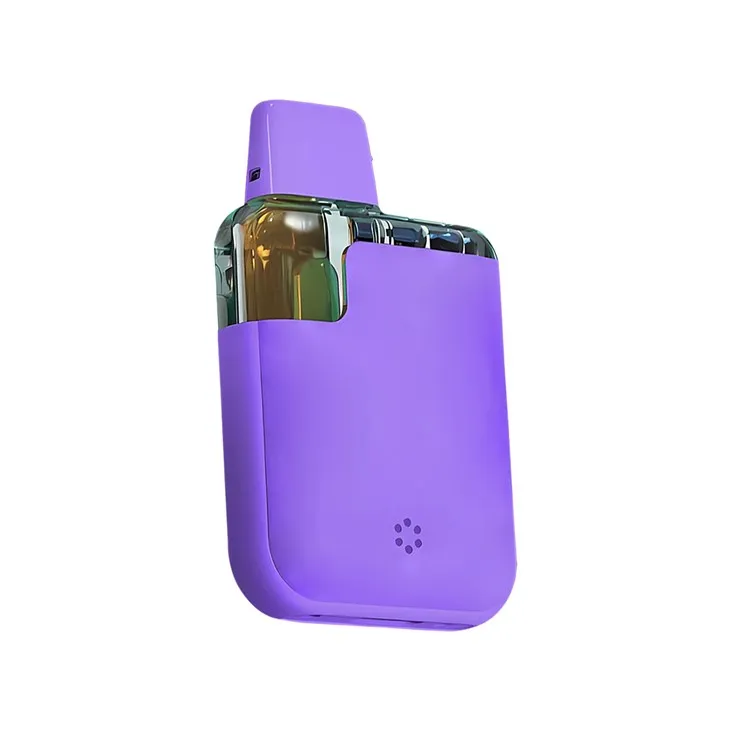
The global cannabis market is one of the fastest-evolving commercial landscapes in the world. New regulatory frameworks are opening up in European countries, established North American markets are seeing increased competition and sophistication, and emerging Asian-Pacific markets are developing their own regulatory approaches to cannabis and cannabis-adjacent products like hemp-derived CBD. For distributors operating across any of these markets, understanding the AIO vape hardware landscape is a practical business necessity.
The Diversity of Global Cannabis Market Requirements
One of the defining challenges for global cannabis distributors is the sheer diversity of market requirements across different regulatory jurisdictions and consumer cultures. A product that is perfectly positioned for the California cannabis market may require significant adaptation for a European CBD market or an Australian medicinal cannabis program. Hardware that works beautifully for the North American live rosin consumer may be completely mismatched for a market where distillate products dominate.
For distributors, this diversity means that working with a hardware partner who can serve multiple oil types, multiple form factors, and multiple customization configurations is far more efficient than managing separate hardware supplier relationships for each market or client type.
Oil Type Diversity Across Global Markets
Different global markets have developed distinct oil type preferences driven by regulatory frameworks, extraction technology access, and consumer culture. Understanding these preferences helps distributors choose the right AIO Vape hardware platforms for each market context.
North American premium markets, particularly in established regulated states and provinces, have significant demand for live rosin and live resin products. These markets support the premium pricing that justifies the cost of postless hardware with specialized low-temperature ceramic coils. Distributors serving these markets need hardware platforms specifically engineered for high-viscosity oil delivery and terpene preservation.
European and other international markets that are more focused on CBD or hemp-derived products have different requirements. These markets often prioritize distillate or broad-spectrum formulations, which pair well with standard ceramic coil configurations at conventional voltage ranges and in larger capacity formats.
Regional Regulatory Considerations and Hardware Design
While hardware design should be driven by oil performance requirements first, regional regulatory considerations occasionally intersect with hardware feature choices. Markets with specific restrictions on device features, battery capacity thresholds, or device modification capabilities may require hardware configurations that comply with those requirements.
Distributors with established regulatory expertise in their markets are better positioned than the hardware manufacturer to assess these compliance requirements. The hardware manufacturer's role is to understand the technical configuration needed and build a device that meets it. The distributor's role is to translate regulatory requirements into hardware specifications the manufacturer can implement.
Supply Chain Consistency for Multi-Market Distribution
For distributors managing cannabis product distribution across multiple markets, production consistency across multiple orders is a fundamental supply chain requirement. The second production order of a hardware product needs to perform identically to the first, and the fifth order needs to match the second. Any quality drift between production runs creates field quality issues that are particularly difficult to manage across geographically dispersed distribution networks.
A manufacturer with integrated in-house production, quality control, and documented production standards can maintain this consistency in ways that trading companies sourcing from multiple external suppliers cannot guarantee. Internal quality standards maintaining defect rates below 1 in 100,000 units reflect the kind of production discipline that supports reliable multi-order consistency.
Customization for Multiple Brand Clients
Many cannabis distributors support multiple brand clients with distinct identities, oil types, and market positions. A hardware partner who can customize the same underlying All-In-One Disposable Vape platforms differently for each brand client, varying voltage configuration, ceramic coil selection, surface finish, color, and packaging, allows the distributor to serve all of their brand clients through a single hardware manufacturing relationship.
This consolidation simplifies the distributor's supplier management, quality oversight, and production scheduling functions while still delivering genuinely differentiated products for each brand client.
Fast Production Timelines for Dynamic Markets
Cannabis markets move quickly. Retail windows open and close on short notice, competitive dynamics shift with new product launches, and consumer preferences evolve faster than in more mature consumer goods categories. A hardware partner capable of delivering production orders in as little as 35 days gives distributors the agility to respond to market changes without long production lead times that leave them unable to capitalize on demand opportunities.
This production speed requires integrated manufacturing capabilities where R&D, production, and quality control are managed internally. Manufacturers that rely on external vendors for key production steps cannot control their timelines with the same reliability.
Low MOQ for Emerging Market Entry
When distributors are entering new cannabis markets, either geographic markets or new product category segments within existing markets, the ability to place initial orders at lower minimum quantities is a meaningful risk management tool. Starting MOQs around 1,000 units per design allow distributors to test new markets and new product configurations without committing to inventory levels that cannot be absorbed if the market response is slower than anticipated.
Technical Support That Bridges Manufacturing and Market
For distributors operating in North American markets, access to technical support from a hardware partner with product presence in California adds valuable practical support. Technical questions that arise during distribution operations, whether related to product performance, fill quality concerns, or hardware configuration inquiries, can be addressed more efficiently with a local technical contact than through extended overseas communication cycles.
Conclusion
Global cannabis distributors need hardware partners who can serve the full diversity of their market requirements across oil types, regulatory frameworks, consumer preferences, and brand client identities. A comprehensive AIO vape hardware program that covers multiple device formats, multiple oil type configurations, full OEM customization, consistent production quality, fast turnaround, and accessible MOQ tiers provides the supply chain foundation that professional cannabis distribution operations require. The distributors who build these hardware partnerships effectively will be better positioned to serve their brand clients and markets as global cannabis commerce continues to develop.